
Objetivos:
Conocer los principios y fundamentos de la Economía Circular que permita identificar beneficios y fuentes de creación de valor que genera.
Implementar herramientas y mecanismos adecuados a estrategias de negocio alineados a la economía circular.
Contenido:
MODULO I: Conceptos de economía lineal y circular – Modelos actuales de los productos y servicios.
MODULO II: Principios de la Economía Circular en los diferentes sectores productivos y las ciudades teniendo en cuenta las políticas en Latinoamérica y Colombia.
MODULO III: Gestión de riesgos sociales, ambientales y de gobierno en las empresas mediante el concepto de economía circular
MODULO IV: Herramientas metodológicas que permitan evaluar los modelos de negocio a través de innovaciones circulares (ACV-Huella de carbono)
- Profesor: ASTRID YURANY HERNANDEZ RINCON




Energy as a tradable good or service in our society plays a very important role in the goals set by different governmental and non-governmental entities that seek to mitigate and reduce the negative impacts on the planet as a product of the activity and development of different societies. One of the main goals of engineering in our time is the sustainability of goods and services such as energy. In this subject, the future engineer in Energy and Sustainability is introduced to the comprehensive concept of sustainability and how energy acts as an influential actor in the different pillars of sustainability, generating negative or positive interactions between the different indicators or objectives of sustainable development, which must be taken into account by every professional with competence in energy and sustainability issues.

This course present an approach of the basic chemistry and topics related to mass an energy balance in chemical reactions. It is a preparatory course for the courses in like Energy, Environment and Sustainable Development, and Thermodynamics, therefore, it is the starting point of the ENAM (Energy and Environment) training line. Also, this integration transversally involves the incorporation of the English language within the course as a boost to the professional future within the international context.
- Profesor: LUIS EDUARDO JAIMES REATIGA
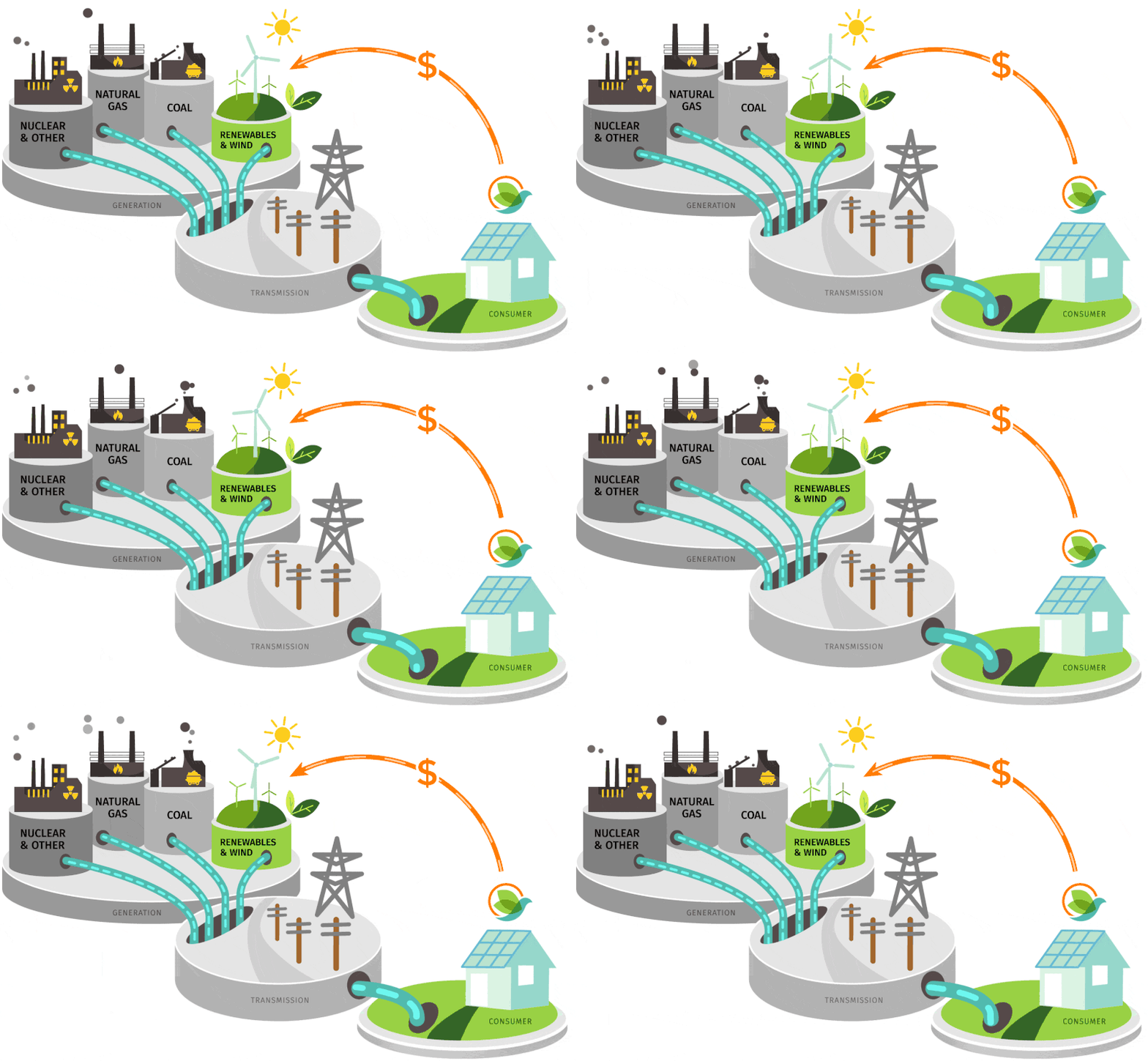
This junior course provides a comprehensive overview of the production and use of various types of fuels, including oil, gas, coal, biofuels, hydrogen and nuclear energy. Students will explore the processes of extraction, refining and conversion of these fuels, as well as their applications in different sectors. In addition, emerging technologies that seek to improve sustainability and energy efficiency will be analyzed.
- Profesor: LUIS EDUARDO JAIMES REATIGA